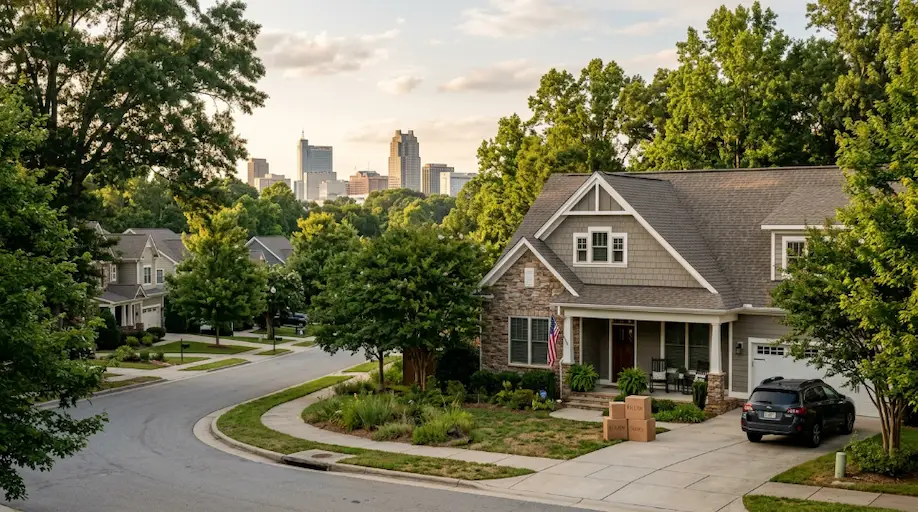
Moving to Raleigh, NC is easier when you plan around your actual routine rather than a list of popular neighborhoods. Your work location, commute, school needs, housing type, airport access, and moving timeline can all change which part of Raleigh or the wider Triangle makes the most sense for you.
Raleigh is growing quickly. The U.S. Census Bureau estimated the city population at 506,306 on July 1, 2025, up 8.2% from the April 2020 estimates base. The local job market also continued to expand: the U.S. Bureau of Labor Statistics reported Raleigh-Cary nonfarm employment at 788,600 in June 2026, 2.6% higher than a year earlier.
| Quick Take Before choosing a home, identify the places you need to reach most often, confirm your realistic housing budget, and compare Raleigh with nearby Triangle communities. Then verify property-specific details such as school assignment, HOA obligations, utilities, commute time, and current market conditions. |
1. Start With Your Daily Routine, Not a Neighborhood Name
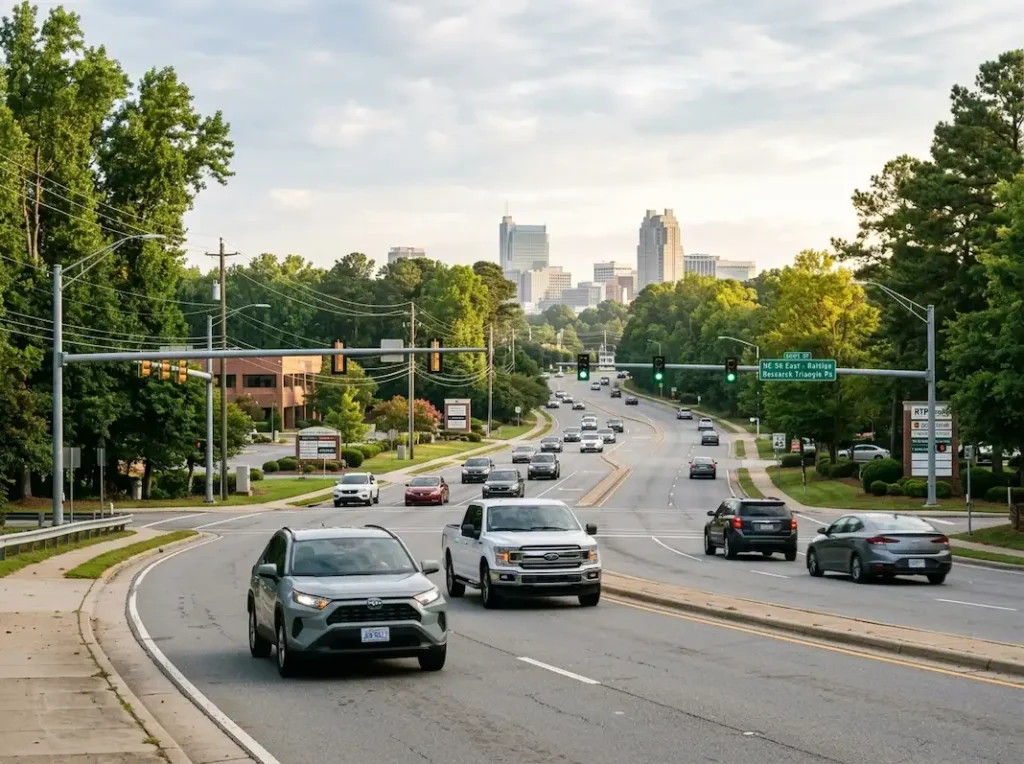
A relocation search usually becomes much easier once you define the trips you will make every week. Raleigh is part of a larger region, and a home that looks convenient on a map may feel very different during weekday traffic.
Research Triangle Park is a major regional employment center located between Raleigh, Durham, and Chapel Hill. In 2026, the Research Triangle Foundation reported more than 385 companies and more than 55,000 employees in RTP. If you are moving for a job there, your commute should be one of the first filters in your home search.
Build a relocation shortlist around these questions
| Priority | What to Check | Why It Matters |
| Work commute | Drive the route from the exact property at your normal work hours. | Distance alone can hide traffic, route, and schedule differences. |
| School needs | Use the official WCPSS address lookup for the specific property. | Assignments are address based and can change. |
| Airport access | Check your likely drive to RDU and the routes you use most often. | Frequent travel can change which side of the Triangle is practical. |
| Outdoor access | Look at actual greenway trailheads, parks, and access points. | A nearby trail on a map is not always directly accessible. |
| Transit | Review current GoRaleigh routes and planned improvements. | Transit usefulness depends on your specific origin and destination. |
2. Decide Whether You Need Raleigh Proper or the Wider Triangle
One of the biggest relocation mistakes is treating Raleigh city limits as the only search area. Patty Owens works with buyers across Raleigh, Wake County, and surrounding Research Triangle communities. If you are still deciding where to focus, start with the Raleigh and Triangle communities page and compare the locations that fit your commute, housing needs, and daily routine.
Your shortlist may include Raleigh, Cary, Apex, Morrisville, Holly Springs, Wake Forest, Garner, Knightdale, Rolesville, Wendell, Zebulon, or other nearby communities. The useful question is not which town is “best.” It is which location fits your life with the fewest compromises.
If you are buying rather than renting, the Raleigh home buyer resources explain how Patty approaches property search, offer strategy, inspections, due diligence, and closing in North Carolina.
3. Get Your Housing Search Ready Before the Moving Truck Is Booked
For buyers, the practical order is usually financing first, location second, and individual homes third. A pre-approval and a realistic monthly budget help you avoid falling in love with a property before you know whether the payment and cash requirements work for you.
- Choose the property types you are willing to consider, such as single-family homes, townhomes, condos, or new construction.
- Decide which commute, school, airport, or family locations are non-negotiable.
- Review HOA dues and responsibilities before assuming two similarly priced homes have similar ownership costs.
- For new construction, understand the builder contract, lot choice, upgrade costs, inspection options, completion timeline, and warranty before committing.
- Use current comparable sales and live inventory for the exact area and property type. Broad citywide numbers are only background context.
Patty Owens is a Compass REALTOR® serving relocation buyers across the Triangle. You can review her local experience and approach on the About Patty Owens page before deciding whether her process fits your move.
4. Verify School Assignments by Exact Address
If public-school assignment affects your move, do not rely on a listing description or a neighborhood name. The Wake County Public School System base assignment lookup uses a residential address to show base elementary, middle, and high school information, along with calendar and transportation details where available.
That makes school assignment a property-level due diligence item. Check it again when you are seriously considering a home, especially if the timing of your move overlaps with a new school year or assignment-plan update.
5. Plan for a Car-Oriented Region, but Check Transit Where It Helps

Many Raleigh-area households rely heavily on driving, so test the routes you will actually use. For current public-transit planning, the City of Raleigh GoRaleigh Transit Plan describes the Wake Transit Plan, express service, and ongoing Bus Rapid Transit work.
If outdoor recreation matters to you, Raleigh also has a substantial trail network. The City of Raleigh Capital Area Greenway lists more than 100 miles of trails across 28 trails. Use the city map to check actual trailheads and connections near a property, not just straight-line distance.
6. Expect Hot Summers and Cooler Winters
People moving from the Northeast, Midwest, or West Coast often underestimate how much weather can affect daily life and home ownership. The National Weather Service Raleigh office publishes long-term climate normals for Raleigh-Durham International Airport. Its 1981-2010 daily normals show typical mid-July highs around 90 degrees Fahrenheit and mid-January highs around 50 degrees Fahrenheit. These are historical climate normals, not a prediction for any specific year.
For a home search, that means it is worth paying attention to HVAC condition, shade, attic and crawl-space details, drainage, stormwater patterns, and the outdoor spaces you expect to use most.
7. RDU Can Be a Major Advantage for Frequent Travelers
Raleigh-Durham International Airport serves a long list of domestic and international nonstop destinations. The RDU nonstop destinations page lists current and scheduled routes and notes that seasonal service and flight schedules can vary. If you travel often, compare real drive times from each property to RDU, especially during the hours you usually fly.
8. Handle North Carolina Driver, Vehicle, and City-Service Tasks Early
If you are moving from another state, the North Carolina Division of Motor Vehicles new-resident guide says new residents who plan to drive must obtain a North Carolina driver license within 60 days of establishing permanent residence. NCDMV also explains the steps for titling and registering vehicles and notes that a North Carolina license or ID is obtained before vehicle registration.
For homes served by Raleigh Water, the City of Raleigh utility-service page advises allowing five business days to process a new service request. As of September 2026, the city lists a $90 deposit for new customers. Verify the current amount and requirements when you apply because service policies and fees can change.
The City also maintains a new residents information page that connects residents to water and sewer, solid waste, recycling, public transportation, elections, and other local services. For city-served homes, garbage, recycling, yard waste, water, and sewer charges can be combined on the monthly utility bill.
9. A Simple Moving-to-Raleigh Timeline
| When | What to Do | Raleigh-Specific Check |
| 6-8 weeks before | Set budget, financing, work location, housing type, and move date. | Compare Raleigh with nearby Triangle communities using your actual commute. |
| 4-6 weeks before | Tour homes in person or by video and narrow the search area. | Verify HOA, school assignment, property condition, and local services. |
| 2-4 weeks before | Arrange movers, insurance, utilities, internet, and address changes. | Start Raleigh utility service early enough for processing. |
| Moving week | Confirm keys, utilities, trash/recycling details, and property access. | Use Raleigh Find Your Services or the applicable municipality for service days. |
| First 60 days | Complete state licensing and vehicle steps if moving from out of state. | Follow current NCDMV new-resident requirements. |
10. Common Relocation Mistakes to Avoid
- Choosing a neighborhood before testing the commute from a specific property.
- Assuming a ZIP code, city name, or subdivision tells you everything about day-to-day convenience.
- Relying on third-party school information instead of checking the current WCPSS address lookup.
- Comparing homes only by price and overlooking HOA dues, maintenance, insurance, commute costs, or new-construction upgrades.
- Waiting until moving week to set up utilities or learn North Carolina DMV requirements.
- Using broad online market averages instead of current comparable sales for the exact location and property type.
Frequently Asked Questions About Moving to Raleigh, NC
Is Raleigh growing?
Yes. The U.S. Census Bureau estimated Raleigh at 506,306 residents on July 1, 2025, an 8.2% increase from the April 2020 estimates base. Growth can affect housing demand, traffic, development, and service planning, so use current local information when making a move.
What should I do first before moving to Raleigh?
Start with your work location, housing budget, move date, and the type of property you want. Those four decisions make it much easier to compare Raleigh with Cary, Apex, and other Triangle communities.
Should I live in Raleigh or a nearby town?
There is no universal answer. Compare each option by your real commute, housing needs, school requirements, airport access, and preferred daily routine. A nearby community may fit better even if your job or social life is centered in Raleigh.
How do I check public-school assignment for a home?
Use the official Wake County Public School System base assignment lookup and enter the exact residential address. Recheck it before you make a decision because assignments and enrollment details can change.
How soon should I start Raleigh utilities?
The City of Raleigh currently advises allowing five business days to process a new utility-service request for homes in its service area. Confirm current timing and requirements when you apply.
How quickly do I need a North Carolina driver license after moving?
NCDMV states that new residents who plan to operate a motor vehicle must obtain a North Carolina driver license within 60 days of establishing permanent residence. Review the current NCDMV checklist because documentation requirements can vary by situation.
Moving to Raleigh Is Easier When the Search Is Built Around Your Life
Raleigh offers access to a large regional job market, a growing city, extensive greenways, RDU, and a range of nearby communities. The challenge is not finding information. It is deciding which information actually matters for your move.
If you are relocating to Raleigh or the Research Triangle, begin with the places you need to reach, the home you can comfortably own, and the timeline you are working with. Then compare properties and communities against those priorities rather than trying to copy someone else’s idea of the perfect neighborhood.
| Planning a Raleigh move? Patty Owens works with buyers and relocation clients across Raleigh, Wake County, and the wider Research Triangle. Explore buyer resources or learn more about Patty before you start narrowing your search. |