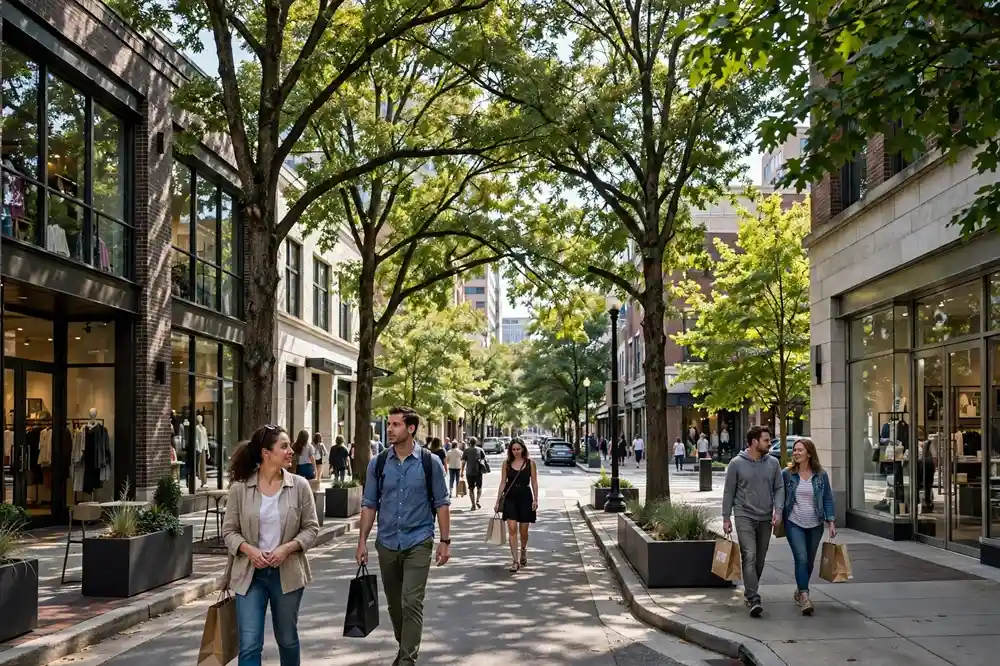
The sales tax in Raleigh, NC is 7.25% on most purchases. That combined rate is made of the North Carolina state rate of 4.75%, a Wake County rate of 2%, and a Wake County transit tax of 0.5%. The City of Raleigh adds nothing on top, which surprises people moving from states where every city layers on its own tax. This guide breaks the rate down piece by piece, then covers the exceptions that change what you actually pay: groceries at a reduced 2%, restaurant meals with an extra 1% prepared food tax, hotel stays with a 6% occupancy tax, and cars, which skip sales tax entirely in favor of a 3% highway use tax. If you are budgeting a move, our Raleigh relocation guide puts this tax in the wider cost-of-living picture.
Quick answer: Raleigh’s combined sales tax rate is 7.25% (4.75% state + 2% Wake County + 0.5% Wake County transit). It applies to most goods, including clothing, electronics, and furniture. Staple groceries are taxed at just 2%, prescription drugs are exempt, restaurant meals effectively cost 8.25% in tax once Wake County’s 1% prepared food tax is added, and hotel rooms effectively cost 13.25% once the 6% occupancy tax is added. Buying a house itself carries no sales tax. Rates below were verified in October 2026 against NC Department of Revenue materials.
1. The 7.25% rate, broken down
| Layer | Rate | Notes |
| North Carolina state sales tax | 4.75% | Set statewide. The state rate has been 4.75% since July 1, 2011, according to the NC Department of Revenue. |
| Wake County local sales tax | 2.00% | The county layer shared by every Wake County community, from Raleigh to Apex to Wake Forest. |
| Wake County transit tax | 0.50% | Approved by Wake County voters on November 8, 2016 and in effect since April 1, 2017. It funds the Wake Transit plan, administered by GoTriangle. |
| City of Raleigh sales tax | 0.00% | Raleigh does not levy its own sales tax. North Carolina cities cannot; the layers stop at the county. |
| Combined rate in Raleigh | 7.25% | The rate on your receipt for most taxable purchases. |
For context, North Carolina’s combined rates run from 6.75% in the lowest-tax counties to 8.25% at the top, so Raleigh sits in the upper half without being the state’s most expensive place to shop. The 0.5% transit layer is the piece that pushes Wake County above the common 6.75% floor: only Durham, Mecklenburg, Orange, and Wake counties levy it, per the NC Department of Revenue.
2. What the 7.25% rate applies to
North Carolina taxes most tangible goods at the full combined rate. Clothing is taxable in NC (there is no clothing exemption and no tax-free weekend anymore; the state repealed its sales tax holiday in 2014), as are electronics, furniture, appliances, home goods, and digital products such as downloaded software and streaming media sold as digital goods. Many services are not taxed, but services tied to taxable goods, such as repair and installation work on items you own, generally are. Here is what 7.25% looks like in real money:
| Purchase | Sales tax at 7.25% | Total |
| Clothing haul, $100 | $7.25 | $107.25 |
| Laptop, $1,000 | $72.50 | $1,072.50 |
| Appliance package, $5,000 | $362.50 | $5,362.50 |
| Furnishing a new home, $10,000 | $725.00 | $10,725.00 |
That last row is the one relocating buyers underestimate. The house itself carries no sales tax, but furnishing it does, and at Raleigh prices the tax line on a full furniture-and-appliance run routinely lands between $500 and $1,500. Budget it like a closing cost, not an afterthought.
3. Groceries and medicine: the exceptions
The biggest everyday exception is food. North Carolina exempts most grocery food from the 4.75% state rate, so staple groceries are taxed at a reduced 2% local rate only. The catch is the state’s definition of qualifying food: candy, soft drinks, dietary supplements, vending machine food, and anything prepared do not qualify and pay the full 7.25%. Prescription drugs are fully exempt, including insulin and over-the-counter drugs sold on a prescription; the same over-the-counter medicine bought without a prescription is taxed at the full rate. Two smaller reliefs matter to Raleigh shoppers: groceries bought with SNAP benefits are not taxed at all, and food sold directly by the farmer who produced it is exempt, which is part of why the farmers market run can beat the supermarket on more than freshness.
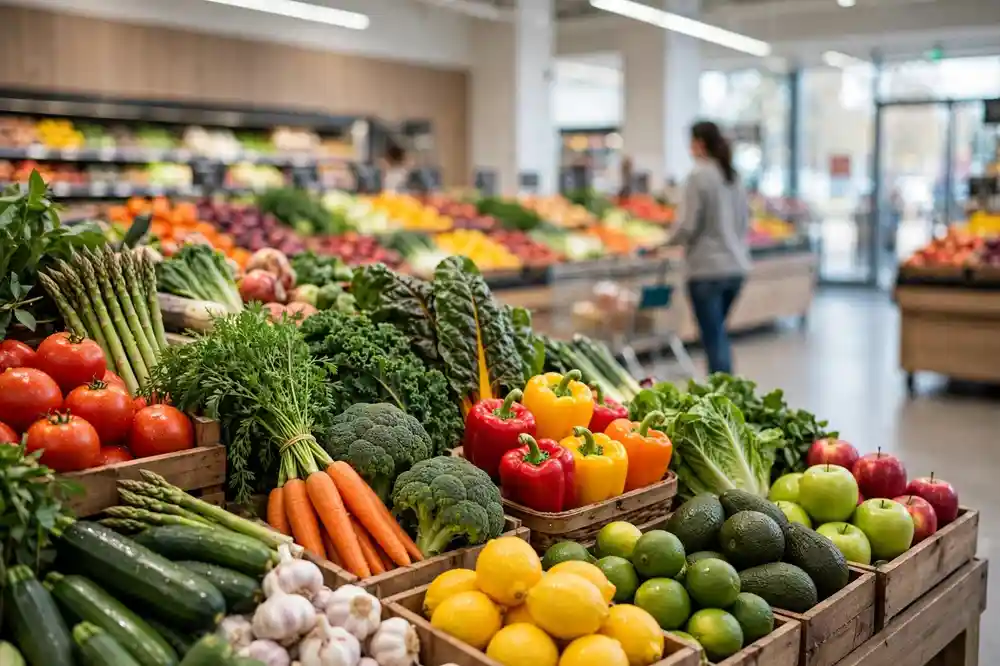
| Item | Tax rate in Raleigh |
| Staple groceries (produce, meat, dairy, pantry basics) | 2% (local rate only, state portion exempt) |
| Groceries bought with SNAP benefits | 0% |
| Candy and soft drinks | 7.25% (full combined rate) |
| Dietary supplements | 7.25% (full combined rate) |
| Prescription drugs and insulin | 0% (exempt) |
| Over-the-counter medicine without a prescription | 7.25% (full combined rate) |
| Food sold by the farmer who produced it | 0% (exempt) |
4. Eating out and hotel stays cost more than 7.25%
Restaurant meals are prepared food, so they pay the full 7.25% combined rate, and Wake County adds a separate 1% prepared food and beverage tax on top. The City of Raleigh’s own hospitality tax explainer confirms the 1% applies to prepared food and beverages at restaurants and bars across the county, so a Raleigh dinner out is effectively taxed at 8.25% before the tip. Wake County is one of only five North Carolina jurisdictions with this meals tax (with Dare, Cumberland, and Mecklenburg counties and the town of Hillsborough), a fact that surprises newcomers from Cary’s neighbors in counties without one. There is no escape by crossing a town line inside Wake County: the tax is countywide.
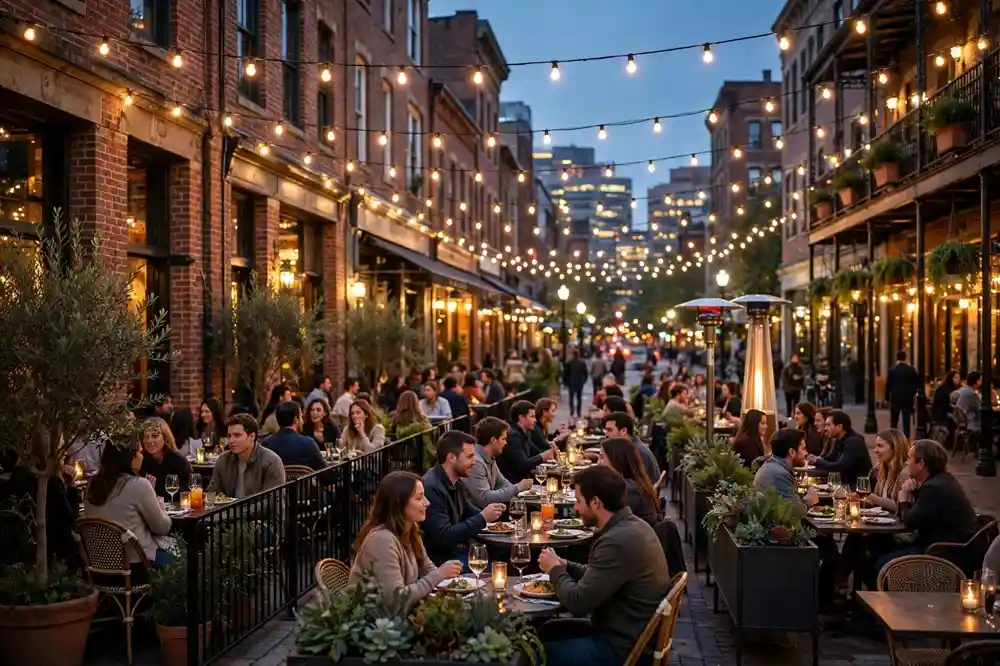
Hotels stack higher. A Raleigh room pays the 7.25% sales tax plus Wake County’s 6% room occupancy tax, an effective 13.25% before any property-specific fees, and the city confirms the occupancy tax also applies to rooms booked through Airbnb and VRBO. These hospitality taxes are not general revenue: under the interlocal agreement between Raleigh and Wake County they fund visitor and civic projects, currently including the Atlantic Union Bank Convention Center expansion, the Red Hat Amphitheater relocation, and the Lenovo Center renovation. Visit Raleigh credits visitor spending ($3.2 billion in Wake County in 2023) with saving each Raleigh taxpayer about $712 a year, which is the local argument for taxing visitors more heavily than residents.
5. Cars: no sales tax, but a 3% highway use tax instead
Vehicles play by different rules in North Carolina. You do not pay the 7.25% sales tax on a car at all. Instead, the state charges a one-time 3% Highway Use Tax when the vehicle is titled, under G.S. 105-187.3. Buy from a dealer and the tax is figured on the sales price minus your trade-in allowance, so trading in a $10,000 car against a $35,000 purchase means tax on $25,000, or $750. Buy privately and the tax is based on the state’s scheduled market value of the vehicle, not the price you negotiated, so a bargain bill of sale does not shrink the bill.
Two caps are worth knowing. New residents get the friendliest one: if you bring a car you already own and it was titled in your name in another state for at least 90 days, the highway use tax is capped at $250 when you title it in North Carolina. Commercial trucks in Class A or B and recreational vehicles are capped at $2,000. Ordinary passenger cars have no cap. Separately, expect an annual vehicle property tax, billed with your registration renewal under North Carolina’s Tag and Tax Together system; that one follows Wake County and city property tax rates, not the sales tax. Full registration steps are in our guide to moving to Raleigh, NC.
6. How Raleigh compares with its neighbors
| Place | Combined sales tax | Why |
| Raleigh, Cary, Apex and all of Wake County | 7.25% | 4.75% state + 2% county + 0.5% transit |
| Durham and Orange County (Chapel Hill) | 7.50% | Higher county layer plus the same 0.5% transit tax |
| Chatham County (Pittsboro, Siler City) | 7.00% | No transit tax |
| Lowest-tax NC counties | 6.75% | State rate plus the basic 2% county layer only |
| Mecklenburg County (Charlotte) | 8.25% | Rose on July 1, 2026 with an additional 1% local levy, per the NC Department of Revenue |
Inside Wake County the rate never changes, so there is no sales tax reason to choose Cary over Raleigh or Apex over either: a sofa costs the same 7.25% everywhere in the county, which our Raleigh vs Cary comparison for home buyers confirms is also true of most of their other costs. What changes the rate is the county line. Most of Raleigh is in Wake County, but a small slice of northwest Raleigh extends into Durham County, and homes and shops with a Durham County address pay 7.5%. Our Raleigh vs Durham comparison for home buyers works through everything else that county line changes. Tax follows the street address, not the city name, so check the county on any specific property, which our Wake County cities guide and the Raleigh to Cary distance guide help you place.
7. What the sales tax means if you are moving to Raleigh
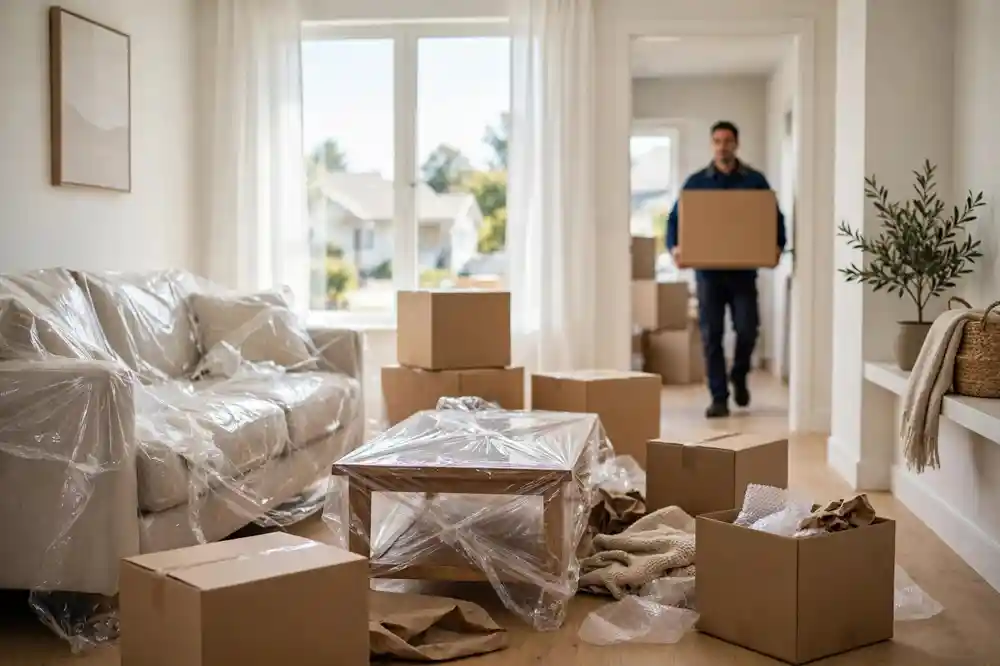
A few practical notes for newcomers. First, your online orders follow you: North Carolina uses destination-based sourcing and marketplace facilitators collect the tax, so deliveries to a Raleigh address are taxed at 7.25% (and grocery deliveries of qualifying food at 2%), no matter where the seller sits. Second, there is no tax-free weekend to wait for; North Carolina repealed its sales tax holiday in 2014, so back-to-school and appliance timing games do not exist here. Third, put a line in the moving budget for the one-time costs this article covered: roughly $725 of tax per $10,000 of furniture and appliances, at most $250 of highway use tax to title a car you already own, and the annual vehicle property tax that arrives with your first registration renewal. None of it is hidden, but all of it is easy to forget between the moving truck and the first grocery run. Our guide to living in Raleigh collects the other first-year costs newcomers ask about.
Frequently asked questions
What is the sales tax in Raleigh, NC?
The combined sales tax rate in Raleigh, NC is 7.25%. It consists of the North Carolina state rate of 4.75%, a Wake County local rate of 2%, and a Wake County transit tax of 0.5%. The City of Raleigh adds no sales tax of its own. The rate was verified in October 2026 against NC Department of Revenue materials and 2026 rate services.
Is the sales tax the same in Cary and Apex as in Raleigh?
Yes. The rate is set at the county level, so every Wake County community charges the same 7.25%: Cary, Apex, Garner, Holly Springs, Wake Forest, and the rest. The rate only changes when you cross a county line, for example into Durham County at 7.5% or Chatham County at 7%.
Are groceries taxed in Raleigh, NC?
Yes, but at a reduced rate. Most staple groceries are exempt from the 4.75% state portion and taxed at a 2% local rate. Candy, soft drinks, dietary supplements, vending machine food, and prepared food do not qualify for the reduced rate and are taxed at the full 7.25%. Groceries purchased with SNAP benefits are not taxed.
How much tax do you pay on a restaurant meal in Raleigh?
Effectively 8.25% in Wake County. Prepared food pays the full 7.25% combined sales tax, and Wake County adds a 1% prepared food and beverage tax on restaurant and bar sales. Wake is one of only five North Carolina jurisdictions with a prepared meals tax.
How much tax is on a hotel room or Airbnb in Raleigh?
Effectively 13.25% before property-specific fees: the 7.25% sales tax plus Wake County’s 6% room occupancy tax. The City of Raleigh confirms the occupancy tax also applies to rooms rented through Airbnb and VRBO.
Do you pay sales tax on a car in North Carolina?
No. Cars are exempt from the regular sales tax and instead pay a one-time 3% Highway Use Tax when the vehicle is titled. Dealer purchases are taxed on the price minus any trade-in. New residents titling a car they owned and titled in another state for at least 90 days pay a maximum of $250.
Does buying a house in Raleigh include sales tax?
No. Real estate is not subject to sales tax in North Carolina, so the purchase price of a home carries no sales tax. Buyers should still budget sales tax on the furniture, appliances, and moving-related goods that come after closing, at 7.25% in Raleigh.
The bottom line
What is the sales tax in Raleigh, NC? 7.25% on most purchases: 4.75% to the state, 2% to Wake County, and 0.5% to Wake County transit, with nothing added by the city. Groceries get a break at 2%, prescriptions are exempt, restaurant meals run 8.25% with the county meals tax, hotel stays run 13.25% with the occupancy tax, and cars skip sales tax for a 3% highway use tax instead. It is a middle-of-the-road rate for North Carolina, and an easy one to plan around once you know the exceptions. (This article is general information about published tax rates, not tax advice; for a specific purchase or business question, confirm with the NC Department of Revenue or a tax professional.)
Patty Owens, a Raleigh REALTOR with Compass, helps buyers budget the full cost of a Raleigh move, from closing costs to the first year of local taxes. Book a Call at 919-602-0612 or through the contact page to talk through your numbers, and see the communities overview for where her buyers are landing across Wake County.