
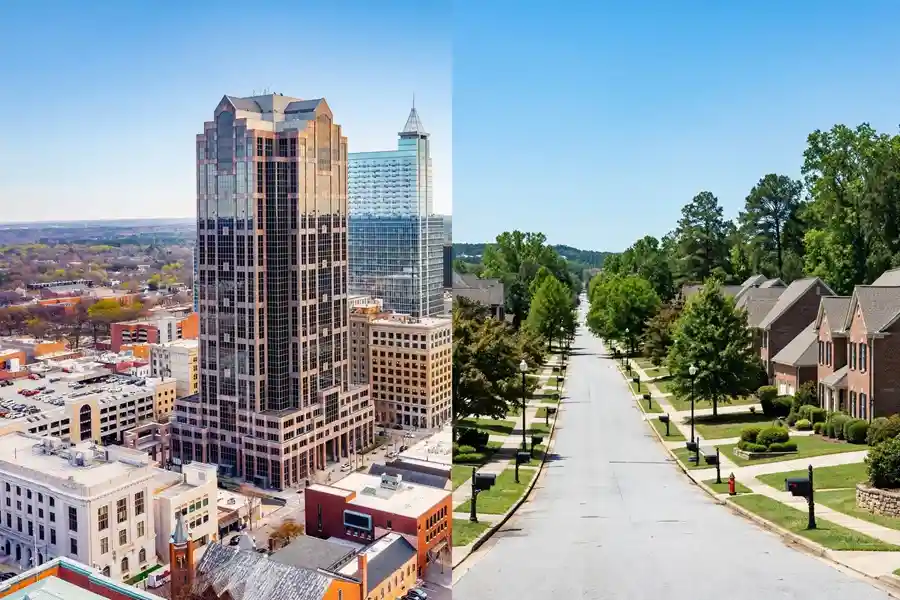
Raleigh vs Cary is the most common comparison relocating buyers ask about in the Triangle, and the honest answer is that neither city wins outright. Cary costs more, with typical home values running roughly $190,000 above Raleigh’s as of late 2026, but it delivers polished suburban neighborhoods minutes from Research Triangle Park. Raleigh offers more variety, more inventory, and a lower entry price, from downtown condos to historic bungalows to North Raleigh suburbs. The right choice comes down to your budget, your commute, and the daily life you want. If you are still learning the area, start with what Raleigh is known for, then use this head-to-head guide to decide.
Quick take: As of late 2026, Zillow’s typical home value sits around $430,000 in Raleigh and around $620,000 in Cary, making Cary the priciest city in the metro. Homes sell faster in Cary (about 25 days on market vs about 39 in Raleigh). Property tax rates are nearly identical between the two. Raleigh suits buyers who want urban energy, neighborhood variety, and value; Cary suits buyers who want top-rated suburban schools, planned neighborhoods, and a short commute to RTP.
1. Raleigh vs Cary at a glance
| Raleigh | Cary | |
| Type | City (state capital, county seat) | Town (Wake County’s largest suburb) |
| Population | About 500,000 (2024 est.) | About 180,000 (2024 est.) |
| Typical home value (Zillow, late 2026) | About $430,000 | About $620,000 |
| Median list price (Sept 2026) | About $430,000 | About $593,000 |
| Days on market | About 39 | About 25 |
| Combined property tax (2026) | 90.91 cents per $100 | 90.46 cents per $100 |
| Vibe | Urban energy, diverse districts | Polished suburb, planned neighborhoods |
| Closest job hub | Downtown Raleigh, state government | Research Triangle Park |
Home value figures reflect Zillow’s typical home value and ListReports median data from mid-to-late 2026, via This Is Raleigh and Stacker. Tax rates are 2026 combined county and municipal rates.
2. Home prices: what your money buys
This is where the Raleigh vs Cary decision usually gets made. As of late 2026, the gap is substantial: Zillow’s typical home value puts Raleigh around $430,000 and Cary around $620,000, and Cary ranks as the most expensive city in the Raleigh-Cary metro. ListReports median data from September 2026 tells the same story at $429,990 for Raleigh versus $593,155 for Cary. In practical terms, the same budget buys noticeably more house, or a closer-in location, in Raleigh than in Cary.
Raleigh’s market is also broader. As the much larger city, it offers everything from downtown condos and historic bungalows to new suburban subdivisions, which means more inventory to choose from and a longer average time on market, about 39 days versus about 25 in Cary, according to July 2026 market data. Cary’s market is smaller, more competitive, and concentrated in premium suburban neighborhoods, so well-priced homes move fast and buyers need to be ready. If you are renting first while you decide, Raleigh is the more budget-friendly option there too, with average rents around $1,800 versus about $2,100 in Cary.
One important note: both markets have cooled from the pandemic frenzy. Year-over-year values were down slightly in late 2026 (about 1.7 percent in Raleigh and 1.4 percent in Cary), which means buyers in 2026 have more negotiating room than they did two years ago, especially on homes sitting 30-plus days.
3. Property taxes: closer than you think
Many buyers assume Cary’s higher home prices come with higher property taxes. They do not. The 2026 combined property tax rates are nearly identical: 90.91 cents per $100 of assessed value in Raleigh and 90.46 cents in Cary, per 2026 Triangle tax data. On a $450,000 assessed home, that works out to roughly $4,091 a year in Raleigh versus about $4,071 in Cary, a difference of around $20. The real tax story is the home price itself: a $620,000 Cary home simply generates a bigger bill than a $430,000 Raleigh home at nearly the same rate. Note that assessed values were reset in Wake County’s 2024 revaluation, so always check the current assessed value of any specific property rather than assuming the list price.
4. Lifestyle and neighborhoods
Raleigh is a capital city with distinct districts and real variety. Downtown and Glenwood South offer condos, nightlife, and walkable blocks. Historic neighborhoods like Oakwood and Mordecai deliver craftsman bungalows under old oaks. North Raleigh feels suburban, with larger lots and top-rated schools of its own. If you want urban energy, cultural institutions, and the option to choose your scene, Raleigh gives you more scenes to choose from. Our guide to where to live in Raleigh, NC breaks the neighborhoods down.
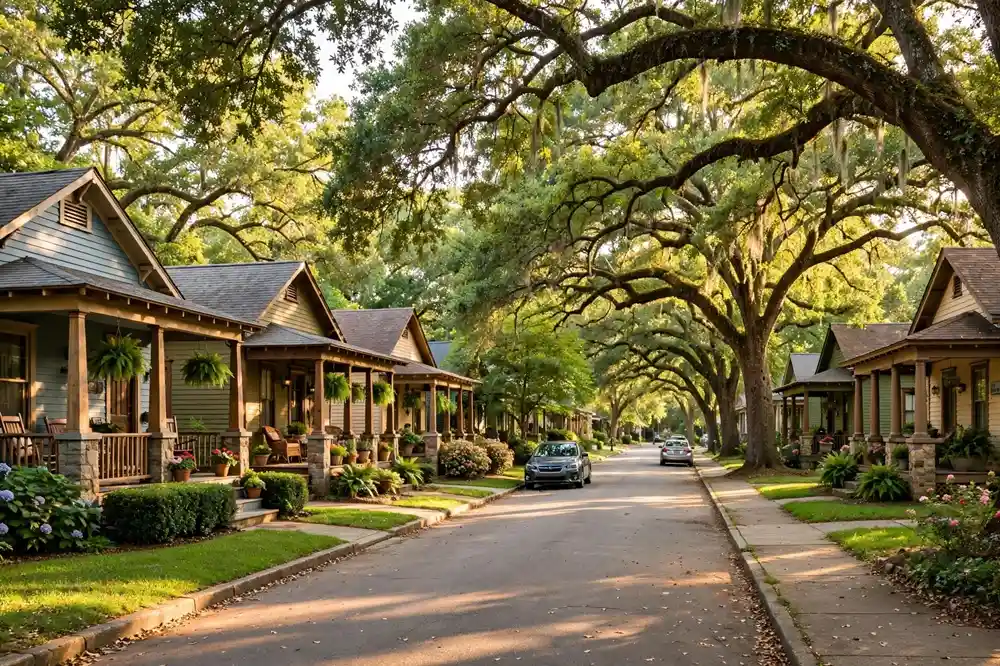
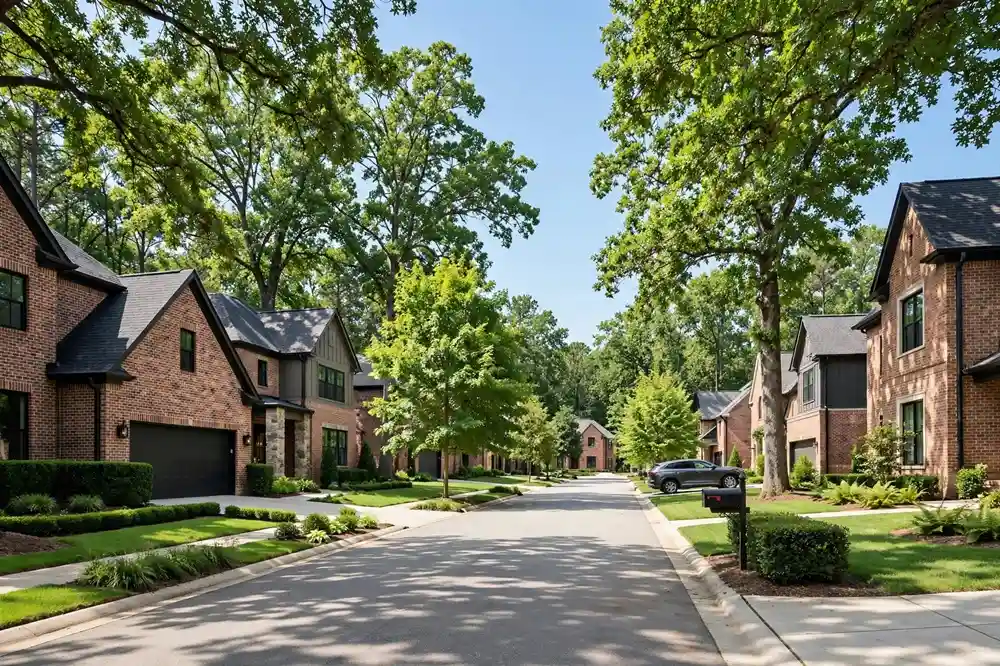
Cary is the polished suburb, and it leans into the role. Neighborhoods are carefully planned, streets are landscaped, and the town invests heavily in parks, greenways, and public art. Downtown Cary has been revitalized with restaurants, a park, and a library anchoring a walkable core. The tradeoff is less variety: Cary does suburban living exceptionally well, but if you want gritty, eclectic, or urban, you will drive into Raleigh for it.
5. Commute and location
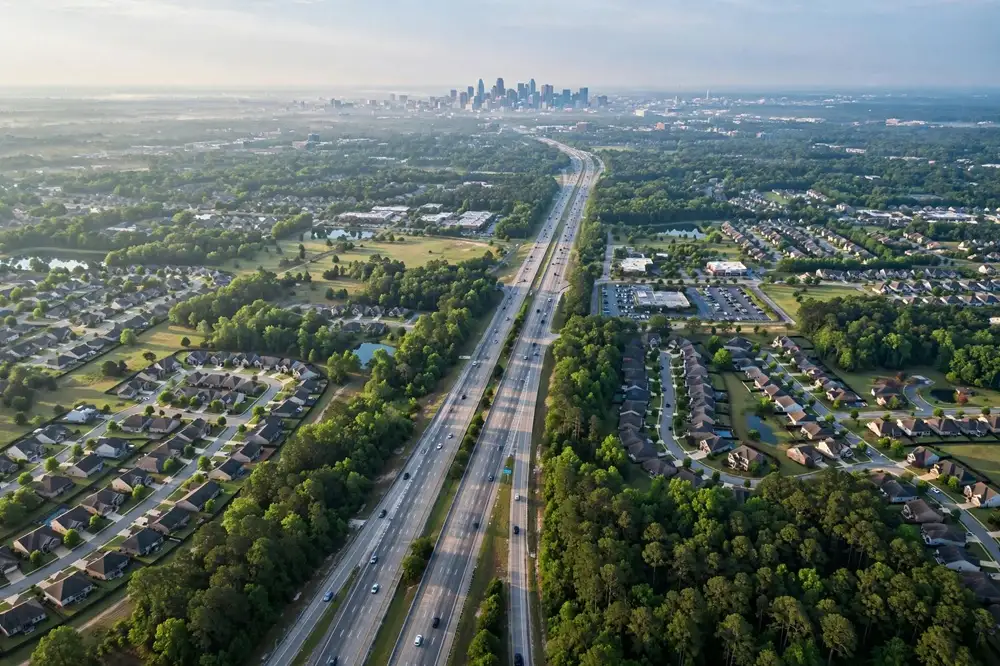
Cary sits about 10 to 12 miles west of downtown Raleigh, roughly a 20-minute drive without traffic, and it is centrally located for the region’s biggest employment hub: Research Triangle Park. If your job is in RTP, Cary, Morrisville, or west Raleigh will save you the most windshield time. Raleigh is the larger footprint, so commute quality depends entirely on which Raleigh neighborhood you choose. North Raleigh to RTP is easy; southeast Raleigh to RTP is a trek. RDU International Airport sits between the two cities, convenient to both. For buyers weighing more towns than these two, our guide to Raleigh and Wake County communities maps the full set of options.
6. Schools and family life
Both cities are served by the Wake County Public School System, so there is no separate Cary school district premium in the tax sense. That said, schools are one of the most common reasons relocating families cite for choosing Cary, and several Cary-area schools are perennially in demand, which supports resale values in those assignment zones. Raleigh has strong school options too, particularly in North Raleigh, but assignments vary widely by address across the large city. The practical advice is the same either way: verify the assigned schools for the specific address before you buy, because attendance zones, not city limits, determine where your kids go. For the broader town-by-town picture, see what cities are in Wake County.
7. Who should buy where
After the data, the decision usually comes down to fit. Use this as your filter:
| Buy in Raleigh if… | Buy in Cary if… |
| Your budget tops out under $500,000 | Your budget reaches $600,000-plus |
| You want urban energy, nightlife, and districts | You want polished, planned suburban living |
| You work downtown or for state government | You work in Research Triangle Park |
| You want the widest choice of home styles | You want newer construction in planned neighborhoods |
| You are an investor seeking rental demand | Schools are your top priority and resale stability matters |
| You prefer an easier, less competitive offer process | You are ready to move fast on well-priced homes |
Frequently asked questions
Is Cary more expensive than Raleigh?
Yes. As of late 2026, Zillow’s typical home value is around $620,000 in Cary versus around $430,000 in Raleigh, a gap of roughly $190,000. Cary is the most expensive city in the Raleigh-Cary metro.
Which is better for commuters to RTP?
Cary. It sits between Raleigh and Research Triangle Park, giving most Cary neighborhoods a shorter drive to RTP than most Raleigh neighborhoods.
Do Raleigh and Cary have the same property tax rate?
Nearly. The 2026 combined rates are 90.91 cents per $100 of assessed value in Raleigh and 90.46 cents in Cary. The bigger tax bill in Cary comes from higher home prices, not higher rates.
Which has better schools, Raleigh or Cary?
Both are served by the Wake County Public School System. Cary-area schools are a frequent reason families choose Cary and support strong resale values, but Raleigh has strong options too, especially in North Raleigh. Always verify assigned schools by address.
Is Cary safer than Raleigh?
Cary has a longstanding reputation as one of the safest towns of its size in the country, and many buyers cite that as a reason for choosing it. For current crime statistics, check the Raleigh and Cary police departments’ published reports for the neighborhoods you are considering.
Should I buy in Raleigh or Cary as an investor?
Raleigh generally offers lower entry prices and strong rental demand from young professionals, students, and state workers, while Cary offers price stability and premium rents. The better investment depends on your strategy: cash flow favors Raleigh’s lower price points, while appreciation stability favors Cary.
Is Raleigh a good place to live?
Raleigh consistently ranks among the country’s best places to live thanks to its job market, universities, greenways, and food scene, and Cary shares in the same regional strengths. For the full picture, see our guide on whether Raleigh, NC is a good place to live.
The bottom line for home buyers
Raleigh vs Cary for home buyers is not a contest with a winner. It is a budget and lifestyle question. Cary buys you premium suburban living, top-rated schools, and a short RTP commute at the metro’s highest prices. Raleigh buys you more choice, more character, and more house for the money, with urban energy you will not find in the suburbs. Either way, you are buying into the same strong Triangle job market, the same county school system, and nearly the same tax rate. Patty Owens, a Raleigh REALTOR with Compass, helps buyers compare Raleigh and Cary street by street every day, from offer strategy to school assignments. Book a Call at 919-602-0612 or through the contact page to talk through which city fits your move, or keep researching with the Raleigh relocation guide and Moving to Raleigh, NC.