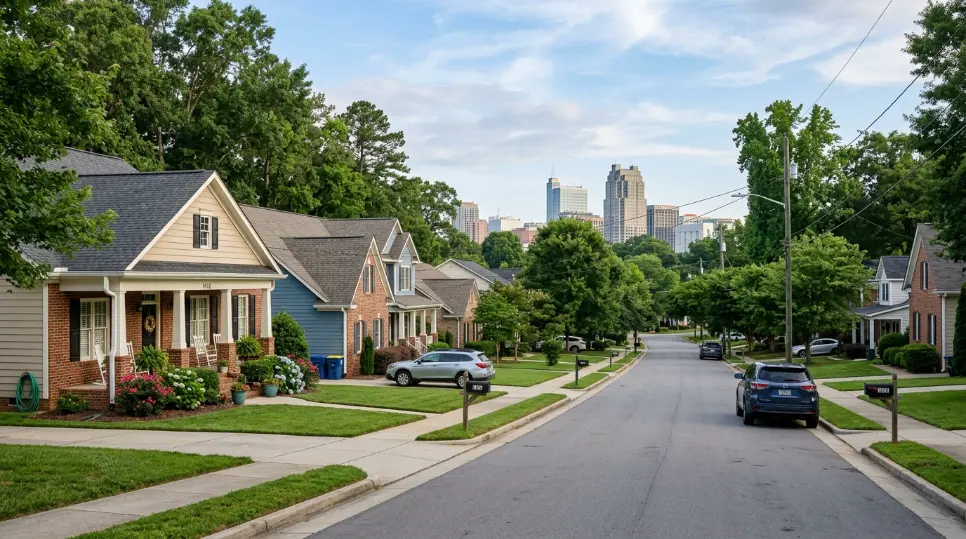
Yes, Raleigh can be a good place to live if you want access to a strong regional job market, a wide range of housing choices, parks and greenways, and easy connections to the wider Research Triangle. The better question is whether Raleigh fits your budget, commute, housing needs, and daily routine. Those details matter more than any generic city ranking.
Raleigh is still growing. According to the U.S. Census Bureau, the city had an estimated population of 506,306 on July 1, 2025, up 8.2% from the 2020 estimates base. That growth is one reason buyers should evaluate the city at the neighborhood and property level rather than relying on a single citywide average.
| The short answer: Raleigh offers a growing employment base, Research Triangle access, more than 100 miles of city greenway trails, and several ways to live, from urban condos to suburban single-family homes. The main tradeoffs are housing cost, summer heat, and commute differences from one part of the area to another. |
Raleigh at a Glance for Someone Considering a Move
| Factor | Current context | What it means for a relocation buyer |
| Population | 506,306 estimated residents as of July 1, 2025 (U.S. Census Bureau) | A growing city where local conditions can change quickly |
| Employment | 787,200 nonfarm jobs in Raleigh-Cary in August 2026, up 2.2% year over year (U.S. Bureau of Labor Statistics) | Job location should be one of the first filters in a home search |
| Housing context | $415,800 median owner-occupied value and $1,572 median gross rent for 2020-2024 (U.S. Census Bureau) | Useful for context, but not a substitute for current listings and recent comparable sales |
| Commute | 23.0-minute mean travel time to work for workers age 16+ in 2020-2024 (U.S. Census Bureau) | Your real commute can vary widely by route, work location, and time of day |
| Greenways | More than 100 miles across 28 trails (City of Raleigh) | Trail access can be a meaningful home-search criterion if you use it regularly |
Why Raleigh Can Be a Good Place to Live
A strong employment base across the Triangle
One of Raleigh’s biggest practical advantages is access to the wider Research Triangle economy. The U.S. Bureau of Labor Statistics listed 787,200 nonfarm jobs in the Raleigh-Cary metro in August 2026, 2.2% more than a year earlier. Research Triangle Park is another major employment center. The Research Triangle Foundation says RTP is home to more than 385 companies and more than 55,000 employees.
That does not make every Raleigh address equally convenient. Someone commuting to RTP may make a different housing decision from someone working downtown, at NC State, near a hospital system, or from home. For a relocation buyer, work location should usually come before neighborhood popularity.
Outdoor access is part of everyday life in many areas

Raleigh’s Capital Area Greenway system includes more than 100 miles of trails across 28 individual trails. The network connects parks and destinations throughout the city and can be useful for walking, running, cycling, or simply getting outside without leaving town.
If greenway access matters to you, check the actual entrance point from a home you are considering. A trail that looks nearby on a map may not have a convenient neighborhood connection.
You can compare several different housing environments
A move to Raleigh does not have to mean choosing only within the city limits. Patty’s Raleigh and Triangle communities coverage includes Raleigh and surrounding Wake County communities such as Cary, Apex, Morrisville, Holly Springs, Wake Forest, Garner, Knightdale, Wendell, Zebulon, and Rolesville. Her site also shows experience across single-family homes, townhouses, condominiums, new construction, and manufactured homes.
That wider search area gives buyers room to compare commute, home type, lot size, HOA structure, and day-to-day convenience instead of forcing every need into one part of Raleigh.
Regional air travel is convenient
Raleigh-Durham International Airport maintains an extensive list of current and scheduled nonstop routes. The airport notes that seasonal service and schedules can change, so frequent travelers should confirm the destinations that matter to them directly on the RDU nonstop destinations page before making airport access a major home-search factor.
What Are the Main Tradeoffs of Living in Raleigh?
Housing is not automatically inexpensive
Raleigh is often described online as affordable, but that word is too broad to be useful on its own. Affordability depends on income, financing, property type, location, and what you are comparing Raleigh with.
The U.S. Census Bureau reports a $415,800 median value for owner-occupied housing units and $1,572 median gross rent for 2020-2024. Those are historical Census measures, not current asking prices or a forecast of what a specific home should cost. Buyers should use current listings and recent comparable sales for the neighborhoods and property types they are actually considering.
Commute quality depends heavily on the exact location
The Census reports a 23.0-minute mean travel time to work for Raleigh workers age 16 and older for 2020-2024. That citywide number is useful for context, but it will not tell you what your weekday feels like. Your route to RTP, downtown Raleigh, Cary, Durham, RDU, or another employment center can be very different.
Before writing off or favoring an area, test the route from the specific property at the time of day you would normally travel. A home can look close on a map and still create a daily routine you do not want.
Summer heat is a real lifestyle consideration
Raleigh has hot summers. The National Weather Service Raleigh office lists normal mid-July highs around 90 F and lows around 70 F for Raleigh-Durham International Airport. Those are 1991-2020 climate normals, not a forecast for any specific summer.
If you spend a lot of time outside, think about shade, screened porches, landscaping, HVAC condition, and proximity to the outdoor places you would actually use.
What About Schools When Choosing a Raleigh Home?
If public-school assignment matters to your move, verify it using the exact residential address. The Wake County Public School System address lookup shows base elementary, middle, and high school assignments by residential address, and it can also show calendar, transportation, and enrollment-cap information where applicable.
Do not rely on a listing description, a neighborhood label, or an old screenshot for school assignment. Boundaries and assignment details can change. Use the current district tool when you are evaluating a specific property.
How to Decide Where to Live in the Raleigh Area
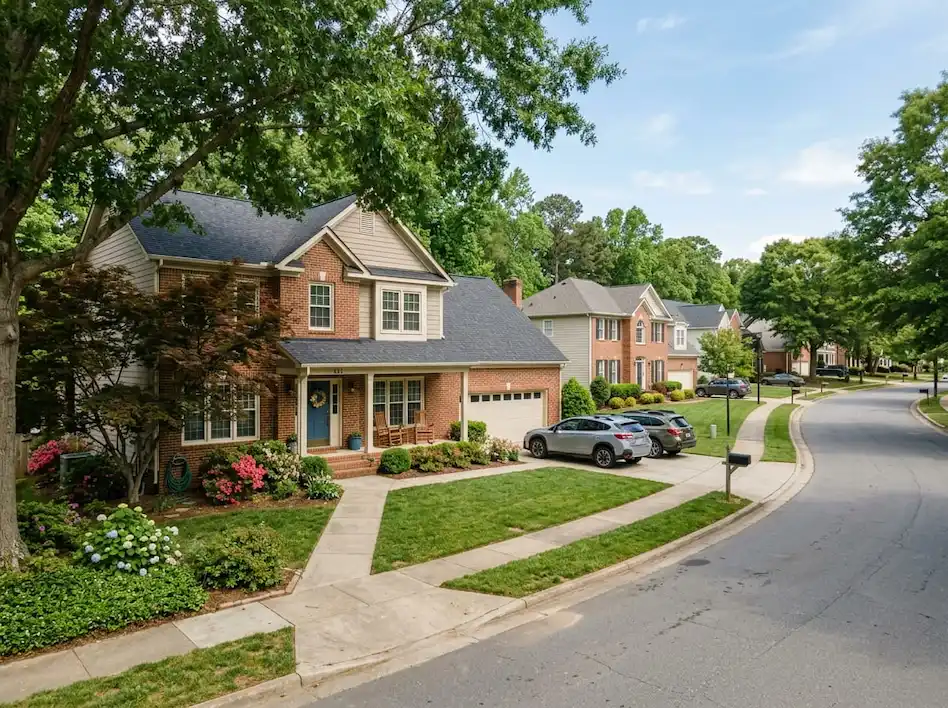
Start with the parts of your routine that are hardest to change. Then use those as filters before you fall in love with a house.
- Work location: Map your real commute from the property during the hours you would travel.
- Housing budget: Use current listings and recent comparable sales, not old citywide averages.
- Property type: Decide whether you are open to a condo, townhome, single-family home, new construction, or more than one option.
- Schools: Verify current WCPSS assignment by exact address if it matters to your household.
- Outdoor access: Check the actual distance to greenway entrances, parks, and recreation you will use.
- Airport travel: Compare real drive time to RDU if you fly often.
- HOA and maintenance: Review dues, rules, maintenance responsibilities, and amenities for the specific property.
If you want to narrow those choices with local context, Patty’s buyer resources explain how she approaches a home search in Raleigh and the Research Triangle. You can also review the communities she serves before deciding which areas deserve a closer look.
Is Raleigh a Good Fit for Your Priorities?
Raleigh may be a strong fit if you want access to the Triangle employment market, value parks and greenways, want several housing types and nearby community options, and prefer a city that is still growing. It may be less attractive if your top priority is a highly transit-oriented daily routine, a cooler climate, or the lowest possible housing cost.
The key is to avoid treating Raleigh as one uniform market. North Raleigh, downtown-adjacent areas, southeast Raleigh, Cary, Apex, and other Wake County communities can create very different daily routines even when they appear close together on a regional map.
A Practical Raleigh Relocation Checklist
- Identify your workplace and the other destinations you will visit every week.
- Set a realistic housing budget before choosing neighborhoods.
- Decide which property types you will consider.
- Test commute times from actual properties, not just city centers.
- Check HOA obligations and property-specific costs.
- Verify school assignments by exact address when relevant.
- Use current comparable sales and listing data before making an offer.
- Compare Raleigh with nearby Triangle communities if they better match your routine.
Frequently Asked Questions
Is Raleigh expensive to live in?
It depends on your income, housing needs, financing, and comparison market. Census 2020-2024 data show a median owner-occupied housing value of $415,800 and median gross rent of $1,572, but those figures are historical context, not current asking prices.
Is Raleigh a good place for employment opportunities?
The Raleigh-Cary metro had 787,200 nonfarm jobs in August 2026, up 2.2% from a year earlier according to BLS. RTP also reports more than 385 companies and more than 55,000 employees. Your own fit still depends on your field and the location of your employer.
What is the commute like in Raleigh?
The Census reports a 23.0-minute mean travel time to work for 2020-2024. Your commute can be much shorter or longer depending on the exact home, workplace, route, and time of day.
How do I verify schools for a Raleigh home?
Use the official WCPSS base-school assignment tool and enter the exact residential address. Do not rely on a neighborhood name or an old listing for current assignment information.
Should I consider Cary or Apex instead of Raleigh?
It can be smart to compare them, especially if your workplace, home type, commute, or daily routine points you toward another Wake County community. The best choice depends on your needs rather than a universal ranking.
So, Is Raleigh, NC a Good Place to Live?
For many relocation buyers, yes. Raleigh offers access to a growing regional economy, a major research and employment corridor, an extensive greenway system, and a broad home search that can extend into nearby Wake County communities. The city is not a perfect fit for everyone, and the details of your commute, budget, home type, and lifestyle should drive the decision.
If you are comparing Raleigh, Cary, Apex, or other Triangle communities, meet Patty Owens and see how she works with relocation buyers. You can also start with her Raleigh buyer resources to build a search around the places you actually need to be and the type of home you want to own.
| Planning a move to Raleigh or the Research Triangle? Book a conversation with Patty Owens to compare communities and build a practical home-search plan. |