If you are wondering what is there to do in Raleigh, here is the short answer: more than fits in a single weekend. North Carolina’s capital pairs big-city culture with small-city ease, and an unusual share of the best experiences cost nothing at all. Free museums, more than 100 miles of greenways, free tours of the State Capitol, and historic parks fill entire days without opening your wallet. Add a nationally recognized food scene, a packed festival calendar, and NHL hockey, and you have a city that is easy to visit and even easier to move to. If you are still getting to know the city, start with what Raleigh is known for, then use this guide to the 25+ best things to do in Raleigh, NC, organized by interest so you can plan your time.
Quick take: The best things to do in Raleigh span free museums (Natural Sciences, Art, History), outdoor escapes (Umstead State Park, the Neuse River Greenway, Pullen Park, Dorothea Dix Park), downtown districts (Fayetteville Street, the Warehouse District, Glenwood South), food and drink (the State Farmers Market, food halls, breweries, barbecue), family favorites (Marbles Kids Museum), sports and shows (the Hurricanes, the Wolfpack, the Duke Energy Center), and easy day trips (Durham, Chapel Hill, Jordan Lake).
1. Explore Raleigh’s free museums
Raleigh is sometimes called the Smithsonian of the South, and one afternoon downtown explains why. The North Carolina Museum of Natural Sciences, established in 1879, is the oldest museum in the state and the largest natural history museum in the Southeast, with free general admission, four floors of exhibits, live animals, and the three-story SECU Daily Planet theater. The North Carolina Museum of Art pairs a permanent collection spanning 5,000 years, including an extensive Rodin collection, with the 164-acre Museum Park, one of the largest museum art parks in North America. The North Carolina Museum of History sits across the street, but note that it is currently closed for a multi-year renovation, so check its status before you go. Round out a museum day with free tours of the North Carolina State Capitol, the City of Raleigh Museum for local history, and CAM Raleigh for contemporary art in the Warehouse District.
2. Get outside: parks, trails, and greenways
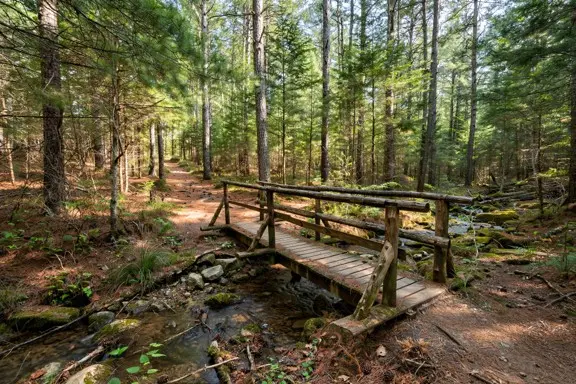
Raleigh’s outdoor life is one of its biggest draws. William B. Umstead State Park protects more than 5,500 acres of forest between Raleigh and the airport, with miles of hiking, biking, and horse trails plus lakes for paddling. The Neuse River Greenway Trail runs 27.5 paved miles along the Neuse River from Falls Lake, with boardwalks through wetlands and suspension bridges, and it anchors a Capital Area Greenway system of more than 100 miles. Pullen Park, opened in 1887 as North Carolina’s first public park, still runs its 1911 Dentzel carousel alongside a miniature train and pedal boats. South of downtown, the 300-acre Dorothea Dix Park offers skyline views, wide lawns, the Gipson Play Plaza playground, and a sunflower field that blooms each July. For quieter escapes, try the JC Raulston Arboretum at NC State, the Raleigh Municipal Rose Garden with more than 1,200 rose bushes, the easy 3-mile loop around Lake Johnson, or historic Yates Mill County Park.
3. Walk downtown Raleigh
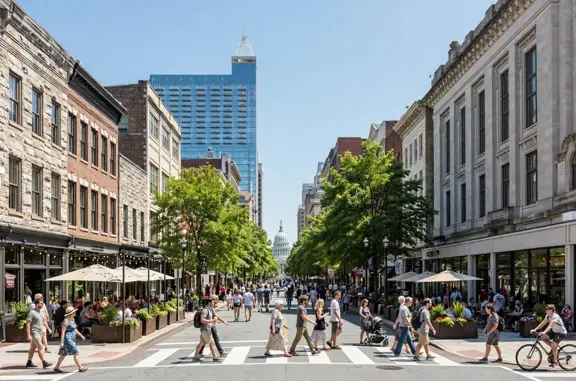
Start on Fayetteville Street, downtown’s main corridor, and you can reach most of the city’s urban highlights on foot. Tour the State Capitol, browse the shops and restaurants of Historic City Market, and cross Moore Square, downtown’s oldest park and a regular event venue. The Warehouse District mixes galleries and creative spaces with the Morgan Street Food Hall’s 20 artisan vendors, while Glenwood South packs bars, restaurants, and live music into a few walkable blocks. Time a visit for First Friday, the monthly downtown celebration when galleries open late with free art, music, and extended hours. Love the downtown energy? See our guide to where to live in Raleigh, NC to compare neighborhoods near the action.
4. Eat and drink your way through the city

Raleigh rewards hungry visitors. Start the morning at the State Farmers Market for local produce, then graze through the Morgan Street and Transfer Co. food halls for everything from dumplings to barbecue. Eastern North Carolina whole-hog barbecue is the local specialty worth seeking out, and the city’s chef-driven restaurants have earned national recognition, including a James Beard Award for Outstanding Chef. For drinks, follow the Raleigh Beer Trail through local taprooms. April is the city’s official craft beer month, and Brewgaloo, North Carolina’s largest craft beer festival, takes over Fayetteville Street each year with more than 100 North Carolina breweries.
5. Bring the kids
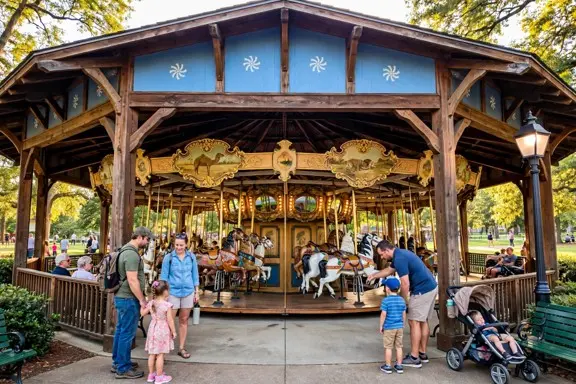
Raleigh is an easy city with children. Marbles Kids Museum downtown is built for hands-on play for younger kids, while the Museum of Natural Sciences keeps older kids engaged with dinosaurs, live animals, and working research labs they can watch. Pullen Park’s carousel, train, and pedal boats have entertained families since 1887, and the Gipson Play Plaza at Dorothea Dix Park is one of the region’s most ambitious playgrounds. For a calmer outing, the 3-mile loop around Lake Johnson works for strollers and new cyclists alike.
6. Catch a game or a show
Sports fans get a full calendar. The Carolina Hurricanes bring NHL hockey to Lenovo Center, where the team won the Stanley Cup in 2006, and NC State Wolfpack football and basketball pack Carter-Finley Stadium and Lenovo Center on game days. For performing arts, the Duke Energy Center hosts Broadway tours, the symphony, ballet, and opera, while the open-air Red Hat Amphitheater brings summer concerts downtown. Festival season runs from spring through fall with the Hopscotch Music Festival each September, Raleigh Wide Open each October, and the North Carolina State Fair, the state’s largest annual event, every October.
7. Take an easy day trip
Raleigh’s central location makes the whole Triangle an easy day trip. Durham, about 25 minutes northwest, offers Duke University’s campus and chapel, the revitalized American Tobacco Campus, and Durham Bulls baseball. Chapel Hill, about 30 minutes west, centers on the UNC campus and Franklin Street’s shops and restaurants. Jordan Lake, about half an hour southwest, is the go-to for boating, swimming, and fishing. If these towns start feeling like home, explore our guide to Raleigh and Wake County communities to compare them side by side.
Things to do in Raleigh at a glance
| Thing to do | Cost | Time needed | Best for |
| NC Museum of Natural Sciences | Free | 2 to 4 hours | Families, science lovers, rainy days |
| NC Museum of Art and Museum Park | Free (permanent collection) | 2 to 3 hours | Art lovers, walkers, picnics |
| NC State Capitol tour | Free | 1 hour | History buffs, first-time visitors |
| Umstead State Park | Free | Half day | Hikers, bikers, paddlers |
| Neuse River Greenway Trail | Free | 1 to 4 hours | Cyclists, runners, walkers |
| Pullen Park | Free entry; small ride fees | 2 to 3 hours | Young kids, families |
| Dorothea Dix Park | Free | 1 to 3 hours | Skyline views, playgrounds, festivals |
| JC Raulston Arboretum | Free | 1 to 2 hours | Garden lovers, photographers |
| Downtown: Fayetteville St and City Market | Free to explore | Half day | First-time visitors, foodies |
| Marbles Kids Museum | Ticketed | 2 to 3 hours | Young children |
| State Farmers Market | Free entry | 1 to 2 hours | Food lovers, Saturday mornings |
| Brewery hopping / Beer Trail | Varies | An evening | Adults, groups |
| Carolina Hurricanes game | Ticketed | One evening | Sports fans |
| Duke Energy Center show | Ticketed | One evening | Theater and music lovers |
| Day trip: Durham or Chapel Hill | Free to explore | Full day | Extending your visit |
Frequently Asked Questions
What is there to do in Raleigh for free?
A lot. The NC Museum of Natural Sciences, the NC Museum of Art’s permanent collection and 164-acre Museum Park, free tours of the State Capitol, the JC Raulston Arboretum, the Raleigh Rose Garden, 100+ miles of greenways, Umstead State Park, Dorothea Dix Park, and First Friday downtown are all free.
What is there to do in downtown Raleigh?
Walk Fayetteville Street, tour the State Capitol, visit the Natural Sciences and History museums, browse Historic City Market, cross Moore Square, explore the Warehouse District’s galleries and Morgan Street Food Hall, and spend an evening in Glenwood South.
What is there to do in Raleigh with kids?
Marbles Kids Museum, Pullen Park’s carousel and train, the Museum of Natural Sciences, the Gipson Play Plaza at Dorothea Dix Park, and the Lake Johnson loop are the top family picks.
What is there to do in Raleigh on a rainy day?
The free museums (Natural Sciences and Art) are the classic rainy-day answer. Add CAM Raleigh, the food halls, the State Farmers Market’s indoor vendors, or an evening show at the Duke Energy Center.
How many days do you need in Raleigh?
Two to three days covers the highlights: one day for downtown museums and the Capitol, one for the outdoors (Umstead, greenways, or Pullen Park), and an optional third day for Durham or Chapel Hill.
What is the best time of year to visit Raleigh?
Spring and fall offer the best weather and the fullest festival calendar, including Brewgaloo season, Hopscotch in September, Raleigh Wide Open in October, and the State Fair in October. Summers are warm and humid; winters are mild.
Is Raleigh a good place to live?
Raleigh consistently ranks among the country’s best places to live thanks to its job market, universities, greenways, and food scene. For the full picture, see our guide on whether Raleigh, NC is a good place to live.
Tried the lifestyle? Now find the neighborhood
The best thing about Raleigh is that the list above is not a tourist brochure, it is daily life here. Free museums, trail-filled weekends, food halls, festivals, and hockey are simply what living in the Triangle looks like. If a visit has you thinking about a move, the next step is matching the lifestyle to the right neighborhood and budget.
Patty Owens, a Raleigh REALTOR with Compass, helps buyers and relocating families navigate the Triangle every day. Book a Call at 919-602-0612 or through the contact page to talk through a Triangle relocation plan, or keep researching with the Raleigh relocation guide and Moving to Raleigh, NC.