

Buying a home in Raleigh follows the same seven steps as anywhere else, but North Carolina runs two of them differently, and those differences catch newcomers off guard. First, North Carolina has no traditional inspection contingency: instead you get a due diligence period, during which you pay a non-refundable fee to the seller for the right to investigate the home and walk away if you need to. Second, your closing happens at a real estate attorney’s office, not a title company, because North Carolina requires a licensed attorney to handle closings. This guide walks the full process in order, with the Raleigh market context, the money at each stage, and the questions and checklist buyers actually ask for. If you are still choosing where to live, start with our Raleigh relocation guide and the communities overview; this page covers how the purchase itself works.
Quick answer: The Raleigh home buying process is: (1) get pre-approved and choose a buyer’s agent, (2) search and tour homes, (3) make an offer on North Carolina’s standard Offer to Purchase and Contract (Form 2-T), (4) use the due diligence period (typically 14 to 30 days) for inspections, appraisal, and loan work, (5) clear appraisal and underwriting, (6) close at a real estate attorney’s office, and (7) get the keys. From accepted offer to closing, plan on roughly a month to six weeks for a financed purchase. Budget 2% to 5% of the price for buyer closing costs on top of your down payment, plus two deposits at contract: a non-refundable due diligence fee paid to the seller and an earnest money deposit held in escrow.
The process at a glance
| Step | What happens | Typical timing |
| 1. Pre-approval and agent | Lender verifies income, assets, and credit and issues a pre-approval letter; you sign a buyer agency agreement | Before you tour, 1 to 2 weeks |
| 2. Search and tours | You tour homes, compare recent sales, and narrow neighborhoods | A few weeks to a few months |
| 3. Offer | You submit an offer on Form 2-T with price, due diligence fee, earnest money, and a due diligence period | 24 to 72 hours of negotiation |
| 4. Due diligence | Inspections, appraisal, loan processing, title and survey work, HOA review | Typically 14 to 30 days |
| 5. Appraisal and underwriting | Lender confirms value and final loan approval; you receive the clear to close | Weeks 3 to 5 after contract |
| 6. Closing | You sign at the closing attorney’s office, funds move by wire, and the deed is recorded | Closing day, about 1 to 2 hours |
| 7. Keys and move-in | Possession transfers at recording; utilities and locks transfer to you | Same day or as the contract states |
Step 1: Get pre-approved and choose your buyer’s agent
Pre-approval is not the same as pre-qualification, and sellers in Raleigh know the difference. Pre-qualification is a rough estimate based on what you tell a lender. Pre-approval means the lender has checked your credit, income, and assets and stated a maximum loan amount in writing, and in a competitive market that letter is part of your offer package. Freddie Mac’s weekly survey put the average 30-year fixed rate at 6.95% on September 17, 2026, a useful reminder that rates move constantly: lock your rate strategy with your lender, and do not let a rate quote from months ago set your budget.
Your agent relationship is formal in North Carolina. Expect to sign a buyer agency agreement that defines the working relationship, the duration, the geographic scope, and how the agent is compensated, before your agent starts working as your buyer’s agent in earnest. Choose someone who represents buyers in Raleigh specifically: the due diligence negotiation, the neighborhood pricing, and the attorney-closing process in this article are all local skills, and a generalist from another state will not know them the same way. Patty’s buyers page explains how she works with buyers, and the guide to living in Raleigh helps you narrow the search by neighborhood first.
Step 2: Search and tour homes

Raleigh’s recent market snapshot helps set expectations. In the three months ending August 2026, Redfin data showed a Raleigh median sale price of about $422,221, with homes taking about 39 days on market, selling at about 98.2% of list price, and about 42.5% of listings taking a price drop, while Zillow’s typical home value sat at about $428,671. That is a balanced-to-slightly-buyer-friendly market by Triangle standards: most homes sell near asking, but buyers are not facing the bidding wars of a few years ago. Tour with a notebook, not just a camera: check water pressure, window age, HVAC age, roof condition, and noise at different times of day, and drive the commute at rush hour, a habit our Raleigh to Cary distance guide and Apex distance guide both recommend for their own corridors. For neighborhood character by area, the Raleigh vs Cary comparison and the ZIP code guide are the fastest orientation tools on this site.
Step 3: Make your offer on Form 2-T
Almost every Raleigh residential purchase uses North Carolina’s standard Offer to Purchase and Contract, known as Form 2-T, jointly approved by the North Carolina Bar Association and NC REALTORS. Your offer states the price, the closing date, the due diligence period length, and two deposits that confuse every newcomer, so learn them before you sign:
| Deposit | Paid to | Refundable if you walk away in the due diligence window? |
| Due diligence fee | Directly to the seller | No, almost always. It buys your right to investigate and terminate, and the seller keeps it even if you walk away (returned only if the seller materially breaches). |
| Earnest money deposit | Held in escrow by a neutral third party | Yes, if you terminate properly before the due diligence deadline. After the deadline it typically goes to the seller as liquidated damages. |
Earnest money is negotiable and typically runs 1% to 3% of the purchase price. The due diligence fee is also negotiated and is often smaller, but it is the one buyers most regret misunderstanding: it is not a deposit you get back, it is the price of your exit option. Both deposits are credited toward your purchase at closing if the sale completes. A revised Form 2-T took effect July 1, 2026, and it softened one edge of the fee: it is still due on the contract’s Effective Date, but a buyer now has until the end of the next banking day before being in breach, and the seller must serve written notice (Form 355-T) before terminating for nonpayment, with one more banking day for the buyer to cure. Your agent should walk you through the current form line by line; this article is a guide, not a substitute for that review.
Step 4: The due diligence period, North Carolina’s centerpiece
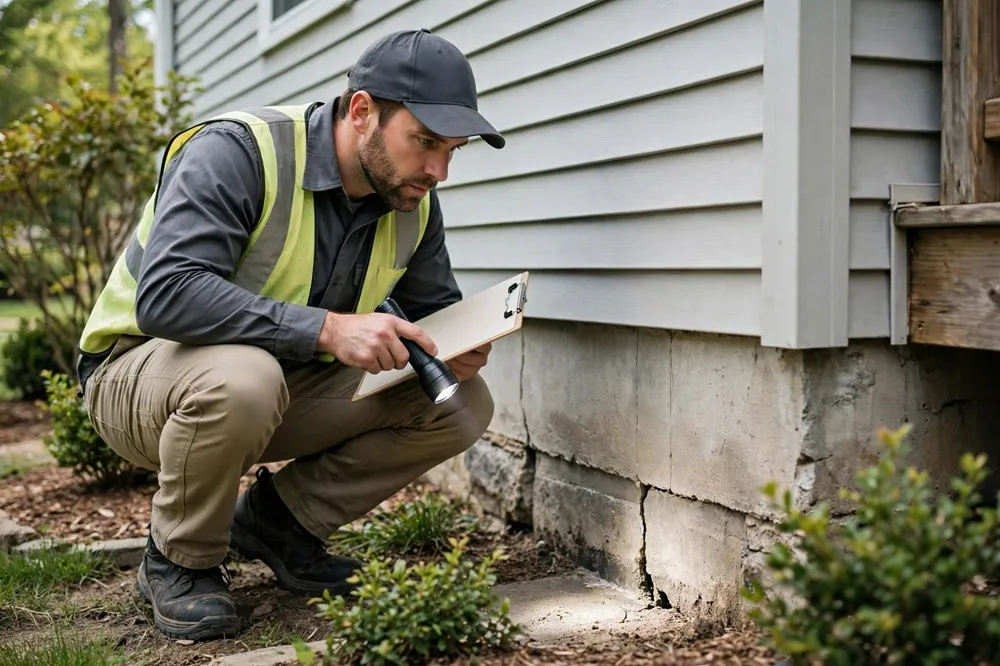
The due diligence period is the window you negotiated in the contract, typically 14 to 30 days, during which you investigate everything and may terminate for any reason or no reason by giving written notice before 5:00 p.m. on the last day. North Carolina follows caveat emptor, the buyer-beware doctrine, which is exactly why this window exists: the burden of discovering problems sits with you, and the period is your tool for doing it. Schedule inspections immediately, because every day of the window matters. The standard list for a Raleigh purchase:
- General home inspection by a North Carolina licensed home inspector (structure, roof, plumbing, electrical, HVAC, appliances).
- Wood-destroying insect report (termite inspection), which many lenders require and which matters in a humid climate like Raleigh’s.
- Radon testing, since radon is a known risk in parts of the Piedmont and the test is inexpensive relative to the purchase.
- Sewer scope for older homes on city sewer, and well water and septic inspections for homes outside city water and sewer.
- Survey confirmation of boundaries, easements, and encroachments, especially on larger or older lots.
- HOA document review: dues, reserves, rules, and any pending assessments, since many Raleigh-area neighborhoods have associations.
- Insurance quotes early, because flood zone status near Crabtree Creek, the Neuse River, and other waterways can change your monthly cost.
You pay for inspections and tests out of pocket, and those costs are not refundable even if you walk away. After inspections, your options are to accept the home, ask the seller for repairs or a credit, renegotiate the price, or terminate. Repair requests are entirely negotiable: the seller is not obligated to agree to any of them, and if the seller does agree, the work must be completed in a workmanlike manner before closing, which you may verify with a final walk-through. If the seller refuses and the numbers no longer work, terminate before the deadline and recover your earnest money. The appraisal also lands in this window, and a low appraisal matters more than many buyers expect: after the due diligence deadline your options shrink dramatically, so push your lender to order it early.
Step 5: Appraisal, underwriting, and clear to close
Your lender orders an appraisal to confirm the home’s value supports the loan. If it comes in below the contract price, you and your agent have a short menu: renegotiate the price, bring extra cash to cover the gap, challenge the appraisal with better comparable sales, or, if you are still inside the due diligence period, terminate. Meanwhile underwriting verifies your employment, assets, and debts a final time. The single most common self-inflicted delay in this phase is a big financial change: do not open new credit, buy a car, move large sums between accounts without documentation, or change jobs mid-process without telling your lender first. When underwriting is satisfied, the lender issues the clear to close, and the closing attorney schedules the settlement.
Step 6: Closing day at the attorney’s office

North Carolina is an attorney-closing state: state law requires a licensed attorney to conduct real estate closings, handling the title search, settlement, and recording. Expect to sign a large stack of loan and title documents, including your mortgage note, deed of trust, and closing disclosure. Your funds must arrive before signing, by wire transfer or certified check, under North Carolina’s Good Funds Settlement Act. The attorney then submits the deed and deed of trust to the Wake County Register of Deeds (or the county where the property sits) for recording, and possession transfers as the contract states, usually at recording. Budget roughly $650 to $1,200 for the buyer’s attorney fee, and note one cost buyers do not pay here: North Carolina’s real estate excise tax of $1 per $500 of sale price is paid by the seller, so $850 on a $425,000 sale comes out of the seller’s side, not yours.
What it costs: cash to close in Raleigh
Three buckets of money leave your account in a Raleigh purchase: the down payment, the deposits, and the closing costs. Buyer closing costs in North Carolina typically run 2% to 5% of the purchase price, covering lender fees, appraisal, attorney and title charges, recording fees, prepaid taxes and insurance, and escrow reserves. On a $425,000 Raleigh purchase, the math looks like this:
| Item | Typical amount on a $425,000 purchase |
| Down payment (example: 10% conventional) | $42,500 (varies by loan: 0% VA and USDA, 3.5% FHA, 3% to 20% conventional) |
| Due diligence fee (illustrative) | $1,000 (negotiated; credited at closing) |
| Earnest money deposit (illustrative, 1%) | $4,250 (held in escrow; credited at closing) |
| Buyer closing costs at 2% | $8,500 |
| Buyer closing costs at 5% | $21,250 |
| Seller-paid excise tax ($1 per $500) | $850, paid by the seller, not you |
| Total cash to close, illustrative (10% down, 2% costs) | $42,500 + $8,500 = $51,000, less deposit credits |
Those deposit credits matter: the due diligence fee and earnest money you already paid reduce the cash you bring to the table. And for first-time buyers, the next section can shrink the down payment bucket itself. Our sales tax guide covers the ongoing local taxes that arrive after closing, and the Raleigh vs Durham comparison shows how property tax rates differ across the county line.
Raleigh Home Buying Process tips
- Get pre-approved before you tour seriously. In a market where homes average about 39 days on market, sellers take pre-approved buyers more seriously, and your budget is real instead of guessed.
- Keep the due diligence fee as small as the seller will accept, and do inspections fast. It is the only money you cannot recover if you walk away.
- Order the appraisal on day one of the due diligence period. A low appraisal is manageable inside the window and painful after it.
- Ask for repairs on major systems and safety items only. A focused, data-backed request gets answered; a 40-item punch list gets ignored, and the seller owes you nothing.
- Drive the commute at 8 a.m. and 5 p.m. before you write an offer, not on a weekend afternoon.
- Budget for the costs after closing, not just at closing: furniture and appliances carry 7.25% sales tax in Raleigh, and your first property tax and insurance bills arrive fast.
- Do not make big financial moves during underwriting: no new credit cards, no car purchase, no unexplained large transfers.
- Verify the parcel, not just the mailing address: county, town, school assignment, HOA, and flood zone can all differ from what the ZIP code suggests.
Raleigh Home Buying Process checklist
| Phase | Checklist item |
| Before touring | Pre-approval letter from your lender |
| Before touring | Buyer agency agreement signed with your agent |
| Before touring | Budget set: price range, down payment, and a closing-cost reserve of 2% to 5% |
| Before touring | Target neighborhoods and must-haves vs nice-to-haves agreed |
| Documents for your lender | Pay stubs for the last 30 days |
| Documents for your lender | W-2 forms for the last 2 years |
| Documents for your lender | Federal tax returns for the last 2 years |
| Documents for your lender | Bank and investment statements for the last 2 to 3 months |
| Documents for your lender | Photo ID and, if applicable, a gift letter for down payment help |
| Offer | Price, due diligence fee, earnest money, and due diligence period length decided |
| Offer | Proof of funds for the deposits ready to deliver on the Effective Date |
| Due diligence | Home inspection scheduled within days of contract |
| Due diligence | Termite report, radon test, sewer scope or well and septic checks as applicable |
| Due diligence | Appraisal ordered early; HOA documents requested and reviewed |
| Due diligence | Insurance quotes obtained, including flood coverage if applicable |
| Due diligence | Repair requests or termination decision made before 5:00 p.m. on the deadline |
| Closing | Closing disclosure reviewed at least 3 business days before closing |
| Closing | Closing funds wired or certified per the attorney’s instructions |
| Closing | Valid photo ID, and a final walk-through completed before signing |
| After closing | Utilities transferred, locks changed, homestead and tax records checked |
Raleigh Home Buying Process questions
Questions to ask your lender:
- What rate can I lock, for how long, and what does it cost to extend the lock?
- Do I qualify for NCHFA down payment assistance, and how does it change my monthly payment?
- Will I pay private mortgage insurance, and when does it drop off?
- What is my total cash to close, not just the down payment, on the price I am targeting?
Questions to ask your agent:
- What have comparable homes in this neighborhood actually sold for in the last 90 days?
- What due diligence fee and due diligence period length are typical for this price range right now?
- How many days has this home been on market, and has the price changed?
- What are the HOA dues, any pending assessments, and the flood zone status?
Questions to ask your inspector, and about the home:
- What are the three most expensive problems in this house, and what will each cost to fix?
- How old are the roof, HVAC system, and water heater?
- Is there any sign of water intrusion, termite damage, or radon risk?
- Are there unpermitted additions or encroachments on the survey?
First-time buyer help in Raleigh
North Carolina runs its main first-time buyer programs through the North Carolina Housing Finance Agency (NCHFA), a self-supporting public agency. You do not apply to NCHFA directly: you work with a participating lender, and the assistance layers on top of your first mortgage. Program terms change regularly, so confirm current Wake County limits with a lender before relying on any figure below.
| Program | What it offers | Key terms |
| NC Home Advantage Mortgage | Fixed-rate first mortgage (FHA, VA, USDA, or conventional) with down payment assistance of up to 3% of the loan amount | Open to first-time and move-up buyers; published income cap $158,000; minimum credit score 640; occupy as your primary residence within 60 days of closing |
| NC 1st Home Advantage Down Payment | Flat $15,000 in down payment assistance instead of the 3% option | First-time buyers (no principal-residence ownership in the past 3 years), military veterans, or buyers in targeted census tracts; same forgiveness schedule |
| Forgiveness schedule (both programs) | Assistance is a 0% deferred second mortgage with no monthly payment | Forgiven 20% per year at the end of years 11 through 15, fully forgiven at the end of year 15 |
| City of Raleigh programs | Additional city assistance for eligible first-time buyers | City programs described in 2026 guidance are aimed at buyers earning no more than 80% of area median income; check the city’s current page for availability |
On a $425,000 purchase, the math is tangible: 3% of a comparable loan is roughly $12,000 to $12,750 of assistance, and the flat $15,000 option can exceed the entire 3.5% FHA down payment on a lower-priced home. Ask your lender to run both options against your price and loan type before you choose. For the wider comparison of where your money goes furthest, the Raleigh vs Cary comparison and the Wake County cities guide are the natural next reads.
Frequently asked questions
How long does the Raleigh home buying process take?
From accepted offer to closing, plan on roughly a month to six weeks for a financed purchase, with the due diligence period (typically 14 to 30 days) as the first and most time-sensitive phase. Cash purchases can close faster. The search phase before the offer varies widely, from a few weeks to a few months depending on your criteria and the market.
Do I need a real estate attorney to buy a home in Raleigh?
Yes, in effect: North Carolina requires a licensed attorney to conduct real estate closings, handling the title search, settlement, and recording of the deed. The buyer’s attorney fee typically runs about $650 to $1,200. You do not need your own attorney for the whole process, but the closing itself is attorney-run, unlike in title-company states.
What is the due diligence fee in North Carolina?
It is a negotiated payment made directly to the seller on the contract’s Effective Date, in exchange for the exclusive right to investigate the home and terminate the contract for any reason during the due diligence period. It is almost always non-refundable, even if you walk away, and is returned only if the seller materially breaches. It is credited toward your purchase at closing if the sale completes. A revised Form 2-T effective July 1, 2026 gives buyers until the end of the next banking day to pay it before being in breach.
How much earnest money do I need in Raleigh?
Earnest money is negotiable and typically runs 1% to 3% of the purchase price. It is held in escrow by a neutral third party, credited toward your purchase at closing, and refunded if you terminate properly before the due diligence deadline. After the deadline, it typically goes to the seller as liquidated damages if you walk away.
Can I back out of a home purchase in North Carolina?
During the due diligence period, yes, for any reason or no reason, by giving written notice before 5:00 p.m. on the last day. You recover your earnest money but forfeit the due diligence fee. After the period ends you are committed, and walking away generally costs both deposits. North Carolina has no separate statutory cooling-off period for home purchases.
How much are closing costs for buyers in Raleigh?
Typically 2% to 5% of the purchase price, covering lender fees, appraisal, attorney and title charges, recording fees, prepaid taxes and insurance, and escrow reserves. On a $425,000 purchase that is roughly $8,500 to $21,250, on top of the down payment, minus credit for the deposits you already paid.
Do I need a 20% down payment to buy in Raleigh?
No. Conventional loans can start at 3% down, FHA at 3.5%, and VA and USDA loans at 0% down for eligible buyers, and NCHFA programs can add up to 3% of the loan amount or a flat $15,000 in assistance. A 20% down payment avoids private mortgage insurance on a conventional loan, which is a real saving, but it is not a requirement to buy.
The bottom line
The Raleigh home buying process rewards buyers who understand two North Carolina rules before they offer: the due diligence fee is the price of your exit, and the due diligence deadline is the last moment that exit is cheap. Get pre-approved, negotiate those two numbers deliberately, inspect fast, and let an attorney-run closing finish the job. Do that, and a process that intimidates most first-time buyers becomes a sequence of manageable steps, roughly a month to six weeks from offer to keys. Patty Owens, a Raleigh REALTOR with Compass, guides buyers through every step above, from pre-approval introductions to the closing table. Book a Call at 919-602-0612 or through the contact page to start your search, and read moving to Raleigh, NC for the relocation checklist that pairs with this guide.